Monday, June 29, 2020

Human Duties

Today we live in an age of human rights. It is the time when every segment of society insists that its rights be recognized and protected.

For instance, the LGBTQ community advocates that marriage be redefined to include same-sex marriage, and that they be assigned a bathroom of their own. The more audacious groups like Kadamay demands free housing, and more. Erring students and their parents invoke their rights under the Child Protection Policy to avoid punishment. In Resident Marine Mammals of the Protected Seascape Tañon Strait v. Sec. Angelo Reyes, it was even argued that marine mammals−toothed whales, dolphins, and other cetacean species−have “the right to sue for the faithful performance of international and municipal environmental laws created in their favor and for their benefit.”

Not that it’s a bad thing to speak of the language of rights. But too much attention on human rights hinders us from focusing on the other equally important side of the same coin: human duties.

One school of thought holds that we have rights because we have duties. Rights proceed from duties, which are based on natural or positive law and contracts. As Mohandas Gandhi once wrote, “all rights to be deserved and preserved came from duty well done.” And in Auguste Comte’s simplest formulation, “there is only one right, and that is to do our duty.”

Thus, a bank has the right to engage in banking business for as long as it observes extraordinary diligence in handling its clients’ money. One also has the right to operate public transportation only if one assumes the duty to transport passengers with extraordinary care.

The same tenet applies to human relations. We live in a diverse society where people believe in different gods, eat different foods, wear different clothes, and observe different cultures. Given that backdrop, imagine how chaotic our society would be if everyone insists on exercising his personal freedom without regard to others.

Anyone who has ridden an airplane knows how strictly regulated is the passenger’s conduct inside the aircraft. Before take-off, passengers are required to fasten their seatbelts, keep the window cover up, stow their belongings properly, and turn off electronic gadgets. During the flight, passengers are not allowed to converge in one place or smoke in the lavatory. And the moment the airplane hits the tarmac, passengers are not yet allowed to get their belongings until the airplane completely stops. All that is to make the flight safe.

Citizenship is like riding an airplane. If we want to enjoy the ride and reach our destination in one piece, we are duty-bound to fasten our seatbelt.

It is thus for our own sake that we observe our duties to our fellowmen. 

Thursday, February 5, 2015

Give peace a chance: Statement of the University of Mindanao on the Mamasapano clash

Words are probably not enough to comfort the grief-stricken families and friends who lost their loved ones in the recent encounter between the Philippine National Police-Special Action Force (PNP-SAF) and Moro rebels in Mamasapano, Maguindanao. While we commiserate with them for having lost a son, a brother, a fiancé, a father, or a friend in that bloody encounter, we cannot, however, join the call to scrap the peace process in general and the Bangsamoro Basic Law (BBL) in particular.

The skeptics among us are now wary of the entire peace process because of what happened in Mamasapano. They’re saying it's pointless to negotiate with the Moro Islamic Liberation Front (MILF) anymore. They don't honor their commitments anyway, so why continue with the peace talk? Some are even so extreme as to suggest that the government should wage an all-out war against the MILF. If we continue to hold peace talks with the MILF and then pass the BBL, the popular sentiment goes, there’s no guarantee that incidents like the Mamasapano clash will not happen again.

But can an all-out war prevent another bloody encounter from ever happening again?

Neither can there be a guarantee that an all-out war will achieve the end we all aspire for the longest time. Nonetheless, the passage of the BBL must not be stopped altogether. We believe that doing so will only worsen the situation. The BBL is no ordinary piece of legislation. It may not be a panacea to the problems in Mindanao, but the BBL is a seed that must be sown so peace starts to blossom.

We concede, though, that the investigation over the killings in Mamasapano must be concluded first before we begin talking about BBL’s passage, so that the people will know what went wrong, who the real culprits are, and in the end, justice will prevail.

In the meantime, while we await the results of that investigation, let us be prudent in our reaction, though hard as it may be in these sorrowful moments. We cannot put out fire with fire. An all-out war is the last thing we need.

We have already been through so much and have lost so many lives in pursuit of peace. The recent Mamasapano encounter demonstrates yet again that our peace-building efforts are sometimes fraught with difficulty and uncertainty.

Even so, let’s give peace a chance.

Sunday, August 31, 2014

Is domestic violence a private matter?

Why is it that the alleged wife beating of Davao City police director Vicente Danao did not generate as much indignation as the “hipon” joke of Ramon Bautista?

I posed that question on my Facebook status wall. A former classmate of mine commented. He said that the difference between the two is that Bautista’s case happened in public, while Danao’s case is purely a private matter which should be best left for the family to resolve.

Taking that argument to its extreme, it would seem that violence against women is justified as long as it happened inside the house. Indeed, domestic violence, because it is domestic, is often seen as purely a private matter. Thus, cases of wife beatings and other forms of violence against women often go unreported.

But the case of Marivic Genosa, a battered woman herself, made the people realize the obviousdomestic violence may be domestic, but it is violence nevertheless. They started to see domestic violence in a different light. They no longer stopped at the domestic aspect of domestic violence, but now they placed more emphasis on the violence.

Marivic Genosa was convicted of parricide for killing her husband. Her case reached the Supreme Court. There, she argued that she did it only to defend herself. She anchored her defense on “Batttered Woman Syndrome.” The Supreme Court was not altogether convinced.

The Court said, “She is not entitled to complete exoneration because there was no unlawful aggressionno immediate and unexpected attack on her by her batterer-husband at the time she shot him” (People v. Genosa, GR 135981, January 15, 2004).

But because of the unique circumstances of her case, the death penalty imposed on her was reduced. The Court said, “The acute battering she suffered that fatal night in the hands of her batterer-spouse, in spite of the fact that she was eight months pregnant with their child, overwhelmed her and put her in the aforesaid emotional and mental state, which overcame her reason and impelled her to vindicate her life and her unborn child’s.”

In her dissent, however, Justice Consuelo Ynares-Santiago said Marivic Genosa must be acquitted. She said, “The danger posed or created in her mind by the latter's threats using bladed weapons, bred a state of fear, where under the circumstances, the natural response of the battered woman would be to defend herself even at the cost of taking the life of the batterer.” Three more justices, including then Chief Justice Hilario Davide, Jr., joined in her dissenting opinion.

Barely two months after the Supreme Court promulgated the Genosa case, Congress passed R.A. 9262, the Anti-Violence Against Women and Their Children Act (Anti-VAWC) of 2004.

The Anti-VAWC Act made into law the Baterred Woman Syndrome as a defense. Section 26 provides, “Victim-survivors who are found by the courts to be suffering from battered woman syndrome do not incur any criminal and civil liability notwithstanding the absence of any of the elements for justifying circumstances of self-defense under the Revised Penal Code.”

The law repudiates the notion that domestic violence, which is just one form of violence against women, is a private matter. Ample provisions of the law actually allow outsiders to intervene even if the parties involved are spouses, or are in a sexual or dating relationship.

For instance, Section 9 allows, among others, “At least two (2) concerned responsible citizens of the city or municipality where the violence against women and their children occurred and who has personal knowledge of the offense committed” to file a petition for protection order.

Section 25 provides, “Violence against women and their children shall be considered a public offense which may be prosecuted upon the filing of a complaint by any citizen having personal knowledge of the circumstances involving the commission of the crime.”

In Section 30, one of the duties imposed upon the Barangay Officials and Law Enforcers is to “respond immediately to a call for help or request for assistance or protection of the victim by entering the dwelling if necessary whether or not a protection order has been issued and ensure the safety of the victim/s.”

And in Section 34, the law exempts persons intervening from any liability: “In every case of violence against women and their children...any person, private individual or police authority or barangay official who, acting in accordance with law, responds or intervenes without using violence or restraint greater than necessary to ensure the safety of the victim, shall not be liable for any criminal, civil or administrative liability resulting therefrom.”

Despite the passage of the Anti-VAWC Act, however, there are those who still cling to the long discredited idea that domestic violence is a private matter. Indeed, defenders of Danao say that the incident between him and his wifea video of which wasuploaded on YouTubewas merely “away mag-asawa.” One should not meddle with it. 


That smacks of insensitivity. To dismiss domestic violence as a private matter despite evidence to the contrary deserves more the civilized society’s contempt than Ramon Bautista’s “hipon” joke. As Rowena V. Guanzon argued, “violence against women in the context of intimate relations is a serious human rights violation; it is not a private matter, it is a crime.”

I can't help feeling worried that he who should enforce the Anti-VAWC Law is he who violated it.

Sunday, May 11, 2014

My Mother is a Martyr

My mother is the type of person you wouldn't want for a company. She gets impatiently easily. She dislikes waiting for a long time, queuing for a long time, standing for a long time, or walking for a long time. She also cannot stand people who can't get her right and fast. Once we went to a mall to look for a pair of gold-colored shoes she could wear for my grandparents' golden wedding anniversary. My mother asked a saleslady if the store has one that's fit for the occasion. The saleslady asked her back, "What's the motif of the wedding, Ma'am?"

 Mama didn't bother to hide her frustration, so she told the saleslady sarcastically, "Gold, alangan!" as if every golden wedding anniversary's motif must be gold.

Yet as I look back on how she raised our family and how she valiantly mend it when it's almost shattered into pieces three years ago, I realized she isn't so impatient at all. Quite the contrary.

Born and raised in Pantukan, Comval Province, Mama came to Davao City to study for college. She got a government scholarship which enabled her to enroll at the Ateneo de Davao University. She took up BS in Biology. Back then, tuition fee at ADDU was a measly 17.00 per unit. Even so, Mama could barely pay off her boarding house, so she eventually had to stop.

By the time she's out of school, she had already been dating my father. Soon they lived as husband and wife. They cohabited for a few years before they finally got married. That marriage produced four children, seven if you include the three miscarriages Mama suffered. Well, those unborn don't have civil personality, so let's settle for four.

Both my parents were poor, not below-poverty-line poor but everything they had screamed lower middle class. So to help Papa feed the four of us, send us to a decent school, and keep us from degenerating into flat worm-stricken malnourished kids, Mama tried her hand at a number of jobs. She delivered lumber, sand and gravel to construction sites.She put up a karinderya. She peddled cheap detergent soaps like Rinso door-to-door . She sold  native delicacies like suman, puto rice, biko, and kutsinta outside the church. Until now when only our youngest brother has yet to get his college degree, Mama showed no sign of letting up. Today she has a small laundry business that is about to die but still miraculously manages to stay alive.

Perhaps the biggest scourge she had to endure came in 2010. It was my graduation day. Visitors had already left. I don't know how, but she confirmed what she had suspected all along---my father was cheating on her. He has an "other woman," a mistress, a kabit. From then on, the situation only worsened. Their hushed confrontations turned into violent episodes of fistfight, hair-pulling, face-scratching, and head-banging-against-the-wall.

Call her naive, but Mama didn't just watch while the family she helped build crumble. She knew our family was falling apart. So why try to build it one more time? She did try anyway. She did some things people told her not do. She searched for Papa when he left the house. She went so far as to confront face-to-face the woman who seduced Papa. She mixed in Papa's coffee that potion which the quack-doctor whom she consulted gave her.

If I were a Pope, I would canonize my mother at once. If not, I would be the first one to scream "Santo Subito!"

I'm not sure if it was her dogged determination to rebuild our family, or her stubborn love for Papa, or the quack-doctor's potion, but after three years of coming home on-and-off, of promising to never leave again but welshing on that promise, Papa finally came home and never left anymore. Our family was whole again. Mama succeeded.

Then on December 4, 2013, Papa died . Upon his death, the wounds we've been nursing seemed to have been obliterated. Of course, Mama still longs for Papa. Before she didn't know Papa's whereabouts. Now she knows where to go. The chase is over at last.

Mama may not be the most patient mother in the world. She may hate waiting, queuing, standing, or walking for a long time. Yet she knew what all great mothers know---love takes time. No wonder she takes time in washing my clothes, sometimes including my underwear.

Friday, April 25, 2014

Nasarapan ngunit Nakulangan: Our Camiguin Trip


Our Camiguin trip was like a quickie—instantly gratifying. But precisely because it’s so quick and gratifying, one is satisfied yet is left feeling “bitin,” as we put it in our vernacular.

Camiguin is a small island. Despite that, volcanoes are crammed in this island―there are seven active volcanoes in Camiguin. People who have gone there said that since the island is so small you can actually go around the entire island in just a day.

So we set out on a trip to Camiguin for a day. We were a mixed group of eleven, twelve if you include the driver. Most of us used to be colleagues at work. A few were friends of a friend who were just invited the last minute because some backed out. At the end of the trip, however, we all simply became friends who shared the same harried and hurried trip.

We left Davao City on the 23rd of April at 2:30 in the morning. The plan was to get to Camiguin via Cagayan de Oro, head to Balingoan Port, then take a ferry boat to Benoni Port in Camiguin. It’s a butt-numbing ride that takes us almost twelve hours, including meal and pee stops.

It was around 1:30 in the afternoon when we reached Camiguin. We took a lunch at an eatery near the San Nicolas de Tolentino Church. After our lunch, we immediately headed to the destinations found on our list: Sunken Cemetery, Old Church Ruins, Walkway to the Old Volcano, White Island, and Ardent Hibok-Hibok Spring Resort where we slept overnight.

The next day, we managed to see the San Nicolas de Tolentino Church, Katibawasan Falls, and that unnamed store where you can buy Vjandep Pastel―that soft bun with yema filling for which Camiguin is also known.

We dropped some places on our list. Had we the luxury of time, we could have visited them all. And since we have a very stringent self-imposed goal—to see as much as must-see tourist spots in Camiguin in a short period of time—what we did was mostly to take pictures, pictures, and more pictures. We neither had time for exploration nor education.

At around 9:30 in the morning, we left Camiguin. My feeling was one of ambivalence. I wasn’t sure if I was satisfied or not.

Perhaps that’s what makes Camiguin enticing to tourists even if it has none of the throbbing nightlife of Boracay or the diverse attractions of Palawan. 

Camiguin gives you the feeling of satisfaction of being able to try it, but at the same time leaves a hollow feeling in you that can only be fulfilled by trying it one more time.

Pay Now, Resign Later: The Dilemma of Private School Teachers Applying in Public Schools

It is but normal that newly licensed teachers seek employment first in private schools before moving on to the public school. This is I think a better move because one might gain professional experiences that cannot be had if one were to apply immediately in public schools. Besides, teaching experience is given a certain point in the recruitment of public school teachers.

Private school teachers who apply in public schools sometimes encounter a problem. For instance, the recruitment process in the public school is long in that one has to wait for months before the result is released. So in the meantime they remain teaching in the private school.

But things get complicated when, in the middle of the school year, the teacher gets appointed to a public school and yet he cannot just leave because the employment contract he signed says he shall pay a certain sum of money once he resigns in the middle of the school year.

Is this allowed under the law? If so, what options do you have when faced with such a situation?

Yes, it is allowed under the law. The obligation arising from that contract is called “obligation with a penal clause” (See Art. 1226, New Civil Code). Its principal purpose is to “ensure the performance of an obligation.” In the case of private school teachers who leave for the public schools, the purpose is to ensure that they remain in the school all throughout the school year.

It is understandable why private schools do this. Private schools, especially those that offer basic education, operate by school year, beginning in June until March. If a teacher leaves in the middle of the school year, it will trigger a series of events that, in the end, will hamper the welfare of the students. The Principal will have to look for a substitute teacher. The substitute teacher will have to be trained anew. She will have to adjust to her new workplace. The students, too, need to adjust to their new teacher.

That’s perfectly right when the Principal can immediately look for a replacement. But worse things happen when she cannot. Students will have to wait for a week or two before their substitute teacher arrives. In the meantime, they must endure a few days of doing seat-works facilitated by someone who knows next to nothing about the subject she’s obligated to take over.

Yet if you feel that you urgently have to leave lest your dream of teaching in the public school will be jeopardized, what you may do?

Of course, the most obvious move is to pay forthright the amount. That is if you have the means, but most often than not you don’t

My proposal is you try to talk to your employer. Your contract is not a petrified document whose terms cannot be changed or eased. Talk to your employer. Tell him the situation. Your employer might refuse to let go of you to avoid the hassle of looking for a substitute teacher. Some employers would even present you with a black-and-white option: either you stay or leave but pay.

Persevere. Negotiate some more. For instance, you can ask your employer that you be given enough time to pay and that you will assist her in looking for a substitute. Trust me. There are employers who prefer to be told frankly about their employee’s plans than to be kept in the dark.

No one has the right to force us to stay in a workplace we don’t want anymore. Employers cannot even prevent their employees from resigning. But let’s remember, “Every person must, in the exercise of his rights and in the performance of his duties, act with justice, give everyone his due, and observe honesty and good faith.”

A Eulogy for the Original "Onyot"

Below is the eulogy I gave at Papa's necrological service. RIP, Antonio "Onyot" C. Ortiz, 1961-2013.

Perhaps the last three years had been the darkest episode of Papa’s life. In April of 2010, on the day of my college graduation, Mama found out that Papa had been cheating on her. Yes, he gave in to temptation. He left our family to live with another woman. He found himself so drowned in debts. Friends and relatives condemned him.

I was so devastated there was even a time I wished that he were dead, so that all the pain that he caused would be undone.

But I continue to ask from God the serenity to accept the things I cannot change and courage to change the things I can.

We did everything we could to win Papa back. But after several failed attempts at convincing Papa to abandon the sinful life that he had fallen into, I told Mama that we should let him go.

Yet something was bothering me. I couldn’t stand the thought of losing Papa just like that. No matter what we all went through, in the end, he is still my father.

So I mustered enough courage and talked to my father. I told him all the things I wanted to tell him. I asked him all the questions I wanted to ask him. Why did he leave us? When is he coming home? I confronted him. I told him my plans. I told him that I longed for the day that he and Mama would be there when I’ll become a lawyer.

When our conversation was over, Papa hugged and kissed me. He never said sorry. But I knew that he was. And he promised that he would go home.

Papa fulfilled his promise. He did finally come home. At the time, there was still fear in Mama’s heart. What if he would leave us again?

But today Mama is not afraid anymore—Papa is home for good. On December 4, 2013, thirteen days before his birthday and twenty-one days before Christmas, Papa died. But I would like to think he just went ahead of us.

There is still sadness in our hearts. And I’ll probably cry whenever I remember Papa, who used to annoy me when he kept on asking the same questions over and over again; who used to make me laugh when he told me his jokes which he told a number of times.

To the people who stood by Papa through his ups and downs, thank you for not easily condemning him. Thank you for seeing the goodness in him. I still would like to think that Papa had been a good father, a good son, a good friend, a good brother, and a good son of God.

Pa, I promise I'll take good care of Mama. And I promise I'll be a lawyer by 2016, but I'm sorry if I cannot make it on time. I know you can wait a year or two.

Goodbye, Pa.

Tuesday, April 15, 2014

What law students may do this summer?


Law students—the really serious ones—are such a stressed lot. They study hard. They lack sleep. They are poked and pressured everywhere by everyone: professors surprise them by giving surprise recitations; friends keep on inviting them for a drinking spree; bosses keep on asking for that assignment way before the deadline.

But summer is here. It’s time to drop that thick, hard-bound, incomprehensible law book. And if you’re a law student, you may want to do these things this summer:

1. CATCH UP SOME SLEEP. Scientists say that an adult brain needs at least six hours of sleep. But you only get to sleep for an average of four to five hours a day. It’s ironic because your brain is supposed to function well all the time, and yet the lack of sleep precisely disables your brain from functioning well. If you have nothing else to do this summer, you might as well get a six or eight hours of sleep.

2. JOIN AN INTERNSHIP PROGRAM. Supplement your classroom experiences with real-world experiences by joining an internship program. Some organizations enlist law students as interns in which they are given tasks where their legal education is of great help. Last year, the Alternative Law Groups conducted a month-long internship program. This year, the Asia Foundation is inviting law students to participate in its Hustisyeah! Program, a case decongestion initiative whose aim is to, well, decongest the congested court dockets.

3. ENROLL IN A COURSE NOT RELATED TO LAW. They say working on something you’re not familiar with enhances your creativity. I don’t know how that works. But if there’s no harm in trying, why not enroll in, say, a two-month culinary course?

4. READ YOUR UNREAD CLASS MATERIALS. I know, you’re supposed to enjoy your summer time. So how can you enjoy if you read your class materials? You cannot. But if you derive joy from learning, you actually can. And summer is the best time to catch up on your readings because there’s no pressure. When you read either the textbook or the cases minus the pressure, haven’t you noticed that you retain more information; you learn better?

5. TAKE SUMMER CLASSES. But if you don’t want to break your momentum, enroll in a subject or two. It’s true that a long summer break can make the students sink into sloth. So by the time they go back to school, they need to find again their rhythm, which takes some time. And for busy law students, they cannot afford to waste their time finding their rhythm.

These are just suggestions. Hence, the use of the word “may.” In Statutory Construction, the use of the word “may” denotes discretion, and cannot be construed as having mandatory effect. If you have a better idea, go for it. Share it with others.

Tuesday, January 28, 2014

To Philippines, My Manita


Every morning during weekdays, grade school and high school students from both public and private schools are made to recite the Panunumpa sa Watawat ng Pilipinas. After that, the recitation of the Panatang Makabayan followed:

Iniibig ko ang Pilipinas
Aking lupang sinilangan,
Tahanan ng aking lahi;
Kinukopkop ako at tinutulungang
Maging malakas, masipag at marangal.
Dahil mahal ko ang Pilipinas,
Diringgin ko ang payo
Ng aking magulang;
Susundin ko ang tuntunin ng paaralan,
Tutuparin ko ang tungkulin
Ng isang mamamayang makabayan;
Naglilingkod, nag-aaral at nagdarasal
Nang buong katapatan.
Iaalay ko ang aking buhay,
Pangarap, pagsisikap
Sa bansang Pilipinas.

So tedious is this morning ritual that students hate to come early in the morning. They’d rather come late than profess their love and allegiance for the Philippines. As a result, they never take both oaths seriously. So once they get out of school, they cast them into oblivion.

Perhaps one reason why our country always ends up being screwed by us is that we forget how to reciprocate our love for our Motherland. But how exactly do we do give the love back? 

The Panata we take for granted provides us a simple guide: “Dahil mahal ko ang Pilipinas,/ Diringgin ko ang payo/ Ng aking magulang;/ Susundin ko ang tuntunin ng paaralan,/ Tutuparin ko ang tungkulin/ Ng isang mamamayang makabayan.”

Maybe if we were just reminded from time to time of our obligation to the country as expressed in the Panatang Makabayan, there would be no Fertilizer Scam, ZTE-NBN Deal, Hello Garci, PDAF-DAP, or Corona Impeachment to speak of. Maybe our country would not be mired in petty political bickering and suffer from short-sighted, partisan, and knee-jerk policies.

This #GLOBEProjectWonderful2014 got me thinking what gift would I give the Philippines if I were to have a Kris Kringle with it.

If the Philippines were my manita, I would give her decals, bumper stickers, and bar pins. On these items are printed these words below taken from the Panatang Makabayan:

“Dahil mahal ko ang Pilipinas, diringgin ko ang payo ng aking magulang.”

“Dahil mahal ko ang Pilipinas, susundin ko ang tuntunin ng paaralan.”

“Dahil mahal ko ang Pilipinas, tutuparin ko ang tungkulin ng isang mamamayang makabayan.”

Those will be distributed to schools, Public Utility Bus and Jeepneys, public spaces such as parks, malls, waiting sheds, and have those posted in any conspicuous place.

The effect may not be seen a day or a week after, but remember our parent’s reminders when we were young?

“Don’t drink.” “Don’t smoke.” “Do study your lessons.” “Do good to others.”

Don’t they stick with us? Are they not inculcated in our minds now?

If there is one thing you can give to the Philippines, what is that gift?

Tuesday, June 11, 2013

A Taste of Alternative Lawyering: My Glad to be Globe Story


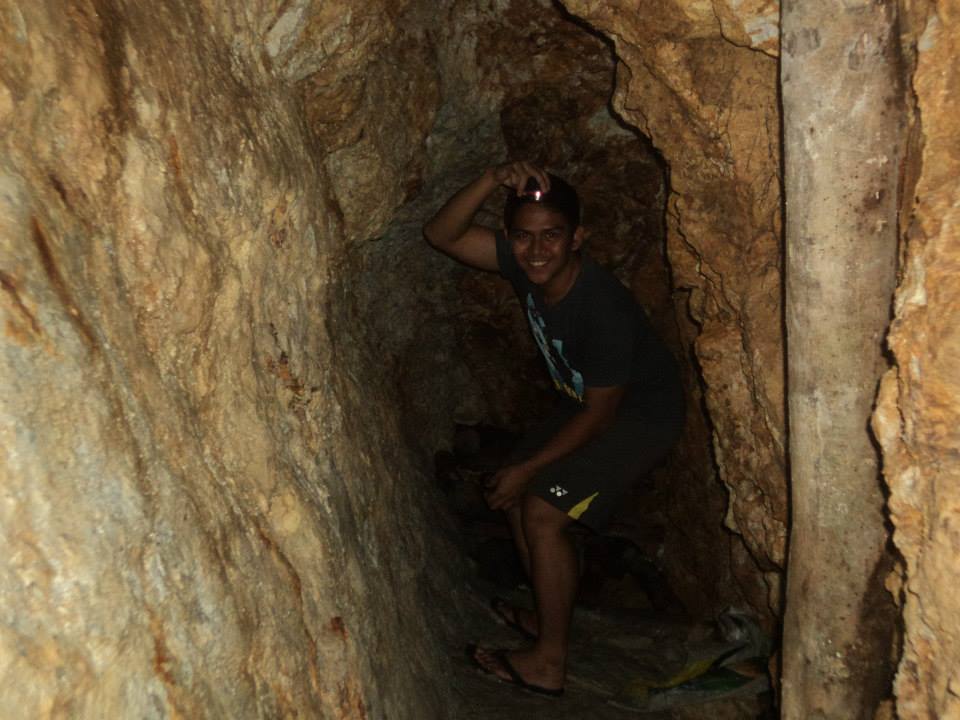
A tunnel of a Kamote Miner (Small-Scale Miner)
Never has my summer been so exciting and fulfilling than this year’s summer, thanks to Globe. If there is one adjective that could describe my summer experience, it is peripatetic.

Sometime in April this year, my schoolmate from law school texted, asking me if I was interested to join the Alternative Law Groups Summer Internship Program for Law Students. If so, he said, I had to submit my résumé, ASAP.

Yes, I said. But the problem was at that the time I received the text I was in the middle of a friend’s birthday party. I had my netbook with me. I had a copy of my old résumé which only needed a little tweaking. There was, however, no way that I could send the résumé because there’s no Internet connection around.


I asked my friend if she has a broadband. Fortunately, she has a Globe Tattoo 4G Flash. She lent me her Globe Tattoo. So fast was the connection in no time I was able to send my résumé. A few days later I received an e-mail, saying that I got accepted into the Internship Program.

Giving lecture to the Mansaka Tribe
From the lectures to the reading assignments, almost everything we do in law school is aimed at passing the Bar Exam. Law school drills students into learning the basics of the law, but provides little opportunity for us to see what the world is beyond the Bar Exam. For the whole school year, students are so engrossed learning the law that they know little about the situation outside the walls of law school.

During the two-month Internship, however, I was given the opportunity to do what is referred to as Alternative Lawyering, an opportunity other law students didn’t have. I reached places which never figure in any tourist’s itinerary. I met fellow law students in Cagayan de Oro. Together with other Interns, I lived among the B’laan tribe in Columbio, Sultan Kudarat. We also interacted with the Mansaka tribe in Brgy. Mainit, Maco, Comval Province, when an NPA insurgency had just fizzled.

Vignettes of the immersion. Photo courtesy of Mark Penalver.
Each of those experiences is a speck of the vast range of activities that Alternative Lawyers do. There’s a lot more, but all seek to make the situation better for the poor and the marginalized sector.

If it weren’t for the Globe Tattoo, I wouldn’t have sent my résumé, and I wouldn't have been accepted into the Internship. I wouldn’t have experienced sharing my meager knowledge of the law to the B’laan or Mansaka Tribe. I wouldn’t have been part, albeit swiftly, in such a noble endeavor as Alternative Lawyering.

I don’t have to borrow anymore a Globe Tattoo because now I do own one. I’m, well, glad to be Globe.

Friday, May 17, 2013

Para Kay Nancy B.

Source: philstar.com
Ma'am Nancy,

Congratualations po sa inyong pagkapanalo. Hindi biro ang inyong dinaanan maabot lang ang posisyon mo ngayon.

Maraming pangungutya ang binato sa inyo. Una, pinuna ang inyong pagiging inexperienced sa larangan ng pulitika. Kahit ikaw ay nag-OJT na nang higit 20 years sa inyong ama at ina, hindi pa rin sila kuntento. Pakitanong nga sa kanila, Ma'am Nancy, ano ba ang gusto nilang experience? Kung ako sa inyo, hayaan niyo na lang sila. Huwag mo na lang pansinin si Vice Ganda kahit nilait niya ang OJT-experience mo.

Pangalawa, pinuna ang hindi niyo po pagdalo sa mga debate and election forum. Sa katunayan, hanga po ako sa pagiging organized ninyo. Sabi niyo po the reason na hindi kayo nakakadalo sa mga debate ay plantsado na kasi ang schedule mo at hindi mo na maisingit ang kaliwa't kanang debate. In terms of time management, fan niyo po ako.

Pangatlo, hindi rin pinalagpas ang inyong kulay. Huwag niyo na rin pong pansinin sila. Hindi po kayo nag-iisa. Ako man din ay nakaranas ng pangungutya dahil sa unfair ko na skin complexion. At bakit, kelan ba naging paputian ang pulitika? Marami namang maiitim ngunit magagaling namang mga lider. I need not mention Barack Obama and Nelson Mandela.

Talagang you cannot please everybody Ma'am Nancy. Pero sa tingin ko po dapat niyong i-please ang higit na 16 Million Filipinos na bumoto sa inyo. Wala rin po kayong dapat patunayan sa mga namimintas sa inyo. Pero sa tingin ko rin po meron kayong dapat patunayan sa bayan.

Iniluklok po kayo sa Senado ng mga tao sa paniniwalang kayo'y makakabuti sa bayan. Whether it's an unfounded belief or not is another matter. Patunayan niyo po sa kanila na you can use your 20-year OJT and craft laws, laws that can really effect some real change in society.

Meron po kayong six years para gawin iyon. At habang nandiyan pa po kayo sa puwesto, enjoy your stay. Ninais niyo po yan.

Lubos na gumagalang,

Ang Inyong No. 1 Fan

Saturday, May 11, 2013

5 Tips na Dapat Dibdibin ng mga Voters Ngayong 2013 Elections

Kapag election dito sa Pilipinas, feeling empowered tayong mga Pinoy. Sino ba naman ang hindi makakaramdam nang ganun. Ang election kasi ang great equalizer. One man, one vote. Bata o matanda, mayaman o mahirap, kapag qualified ka, iisa lang ang boto mo. Lahat pantay-pantay. Sy o Ayala o hindi man ang apelyido mo, pare-pareho lang tayo.

Pero isa itong malaking kalokohan. Sa theory lang ito totoo. Hindi ito ang nangyayari sa reality. Tayo kasi parang isang dalagang virgin na sinusuyo ng mga kandidato. Ito namang mga kandidato ginagawa ang lahat, makamit lang ang matamis nating boto. Kapag nakuha na tayo, mawawala na lang parang bula.

Pero paano ba kumilos nang tama tuwing election nang hindi tayo madaling malamangan ng mga kandidato? Mayroon akong limang mungkahi:

1. Sell your vote to the highest bidder.

Hindi araw-araw may election. Every three years lang. Kaya samantalahin muna ang pagkakataon. Balita ko sa taas ng inflation rate ngayon, inaadjust na rin ng mga kandidato ang presyo ng boto natin. Sa ibang lugar, umaabot pa ng 3,500 ang bilihin. Kung mayroon namang bibili, ibenta mo na.

2. Gawing Picaso o Mulawin ang survey results.

Ang Picaso o Mulawin ay guide ng mga tumataya sa sugal na "Last 2." Dahil busy tayo at walang panahon na makinig sa mga debate, o basahin ang mga platapormang nirecycle lang naman nila sa nakaraang election, iboto mo na lang yong pasok sa Magic 12 ng mga survey. Oo, iboto mo na rin kahit yong mga nag-OJT lang sa kanilang mga magulang. Basta pasok sa mga survey, choks na yon.

3. Forgive and forget.

Kung si Kristo nga pinapatawad yong mga makasalanan, ikaw pa? Oo nga naman. Merong mga tumatakbo ngayon na minsan ng nasangkot sa pandaraya. Huwag mo nang ipamukha sa kaniya na nagkasala siya. Forgive and forget na. Boto mo na rin siya. Perfect attendance naman siya. Hindi pa ba sapat na parusa ang hindi pagliban sa trabaho?

4.  Huwag seryosohin ang tatlong nauna.

5. Kapag sineryoso mo, kanya-kanya na tayo. Bahala ka sa buhay mo.

Monday, May 6, 2013

Why Dabawenyos are soooooooo conyo?


Girl 1: Mag-go ka sa birthday niya?
Girl 2. Hindi. Gisabihan ko na siya na hindi ako mag-go.
Girl 1: Ano ka man uy? Gina-expect ko na baya siya na yang mag-go ka.

This is how a normal conversation goes between two Dabawenyo teenagers studying in a private school. Because non-Dabawenyos used to hear this kind of conversation, they can’t help saying, “Pamati ang mga taga-Davao. Sigeg Tagalog.”

But why do Dabawenyos speak Bisaya peppered with Tagalog, sprinkled with English, and marinated in FB-Twitter expressions?

There is a theory circulating among law students. The theory is that today's generations of Dabawenyos are descendants of the women in Villavicencio v.Lukban.

Who were those women? Why were they shipped to Davao secretly?

Saturday, April 27, 2013

Apologia Pro Maestro sa Sekundarya


Minsan na akong nangarap na maging isang pulis o sundalo. Mas lalo pang tumindi ang pagnanais ko na maging pulis nung nalaman ko na pulis pala ang dalawa kong Ninong.

Noong Grade 6 ako, tinanong kami kung ano ang gusto naming maging. Ilalagay daw ang response namin sa School Yearbook. “To be a soldier,” ang sinulat ko.

When I was about to enter college, napagtanto ko na imposibleng magkatotoo ang pangarap kong maging pulis o sundalo. According to my Ninong, dapat matalino ka sa Chemistry or Trigonometry. Mahina ako sa Chemistry. That I admit. Noong pinatupad ang Zero-Base sa mga public schools, bumagsak ako sa isang Grading Period sa Chemistry noong Third Year ako. Hindi naman sa bobo ako sa mga subjects na ‘yon. Nakakawalang-gana lang talaga makinig sa guro namin sa Chemistry.

Ang talagang problema kulang ako sa height. 5’3” lang ako, give or take an inch. Eh may height requirement daw kung ikaw ay papasok bilang isang pulis o sundalo.

I really don’t know why. Bakit kelangan may katangkaran ang mga pulis o sundalo? Does it follow na kapag mataas ang height, mataas din ang IQ mo? Rumarampa rin ba sila tulad ng mga kandidata sa Miss Universe?

Nagtataka rin ko kung bakit requirement din na maganda ang mga ngipin mo. Ano ba ang gyera ngayon, LIPS-TO-LIPS?

Graduate ako ng Bachelor of Secondary Education major in Social Studies. Sa dinami-rami ng mga course na available sa college, bakit Education? Bakit Secondary?

Ano ba ang gusto mong sagot sa una mong tanong? ‘Yong pang-showbiz slash pang-politika? O ‘yong totoo?

Saturday, April 20, 2013

Bakit Nga Ba Ako Nag-Resign sa Stella?


Ang Stella Maris Academy of Davao ay ang aking employer sa loob ng tatlong taon. Marahil sa aking pag-resign, ikaw ay natuwa, nalungkot, nanibago, nagulat, natatae, naluha, o naasar. Hindi kita masisisi. We live in the Philippines. Lahat tayo ay may karapatang mag-react sa mga nangyayari sa ating paligid. Pero huwag ka naman mag-react na para bang ang pag-resign ko ay ang paghihiwalay nina Janine at ng kaniyang boyfriend.

If you ask me kung ano talaga ang dahilan ko why I left Stella where I was gainfully employed, o sige pagbibigyan kita at sasagutin ko ang tanong mo. Sasagutin kita dahil hindi para tuparin ang iyong kahilingin o pasayahin ka. Kundi sasagutin ko ang tanong mo dahil hindi lang ikaw ang nagtatanong sa akin ng ganyang tanong. FYI, marami kayo. At para na rin hindi na ako tatanungin pa ulit ng ibang tao.

Batid ko naman na hindi lahat ay may FB at makakabasa nitong blog entry ko. Problema na nila ‘yon. I don’t really know why. Sa panahon ngayon na kahit sa Php 5.00 puwede ka ng magkaroon ng access sa Internet, marami pa rin ang nagtatanong tungkol sa mga bagay na puwede naming i-Google.

Sa susunod na may magtatanong sa’yo kung ano ang ibig sabihin ng salitang “quagmire,” sabihan mo, “i-GMG mo! Google Mo, Gago!”

Huwag niyo akong kastiguhin. Hindi sa akin galing ‘yan. Nakuha ko lang ang GMG kay Lourd de Veyra nung binasa ko ang speech na binigay niya sa graduation ng UP MassComm.

But I’m digressing na. So eto sasagutin ko na ang tanong.

A Different Kind of Samal


That small patch of land in Davao Gulf is the Island Garden City of Samal (IGaCoS)—an island because it is completely surrounded by water; garden because of its diverse coral species; and city because it’s flaunted as an “Urban Center in a Rural Setting.”

Samal is one of the cities of Davao del Norte. In its official website, Samal has been characterized as "the place which has it all".  

But what this exactly means?
As an island, a garden, and a city, it has SEAS, the SAND, and the SUN.  It has enchanting mountains, fertile plains, and scenic hills. Its group of islands are located in the Gulf of Davao about 700 meters south of Davao City. 
IGaCoS is now host to more than 30 commercial resorts scattered along its more than 118 kilometers of shoreline with white sand beaches.  Resorts vary from the high-end ones that cater to the highly-discriminating guests, to the rustic type that are preferred mostly by backpackers and adventurers.
Who needs the seas, the sand, and the sun? What of its enchanting mountains, fertile plains, and scenic hills?

But Samal is no “place which has it all.” This I was reminded of during our trip around Kaputian, one of the three Congressional districts in Samal. The other week I was with my uncle who is running for the post of the city councilor for the 3rd District (Kaputian) of Samal. We went from one barangay to another. I was lucky to have joined his campaign, for I have seen firsthand the places in Samal, specifically in Kaputian, that do not get visited by tourists precisely because there is nothing pleasant to see except for the abject poverty and sights that tend to make people look away.

A case in point is Purok 3, Sagrada, short for Sagrada Familia (Holy Family). West of it, one gets an overlooking view of Talicud Island. There are about thirty households living in that purok. The overlooking view is spectacular. The view within Purok 3 is not. The people have no electricity to speak of. A little bath tub was built through the help of the Community Extension Service of San Pedro College.

Barely three weeks is left before election day. But according to the locals, of the ten candidates for the city council for Kaputian, only two have visited them. It's a pity because they are neglected, I think, not so much because the road to Sagrada is hardly accessible, as it is because the voters are too few to be given much regard. 

We left as soon as my uncle was done talking to the leaders of the purok. Yet a different kind of Samal lingered in my mind. Suddenly, it has become a "place which has it all," but cannot be had by all.